


Your complimentary articles
You’ve read one of your two complimentary articles for this month. To have complete access to the thousands of philosophy articles on this site, please
You can register for a free account to have four complimentary articles per month. We will occasionally email you a newsletter, from which you can unsubscribe at any time. We do not sell personal data or otherwise disclose personal information to other organisations.
Life & Death
Who Wants to Live Forever?
Dan Pollen weighs up the pros and cons of indefinitely extended life.
Billionaire Bryan Johnson is obsessed with anti-ageing. This led him to launch Project Blueprint, in which he underwent a series of six monthly one-litre plasma transfusions, using his own son as a donor, in order to reverse or delay the ageing process. This is just the latest high-profile example of a human fascination with extending youth and seeking eternal life. This goal was captured memorably in one of my favourite childhood films, Indiana Jones and the Last Crusade (1989), in which Indy and his father raced to stop the Nazis from obtaining of the Holy Grail, which would grant the holder eternal life. So, let’s start with the obvious question: If someone passed you a cup and said, “Drink this and you will live forever”, would you drink it?
The ancient Stoics would have refused. They thought that reflecting on life's impermanence was the true tonic for life’s sufferings, and knowing that life is short focuses the mind on what’s important (in their minds, virtue). This is summed up in the famous Latin phrase memento mori, meaning, ‘Remember that you must die’. Reminding ourselves daily that life is impermanent means that the little annoyances – late buses, traffic jams, our team’s abject performance – need not upset our inner equilibrium. Instead, we can remain stoically detached enough to stay calm and virtuous in each situation.
This sounds admirable in theory. However, I have yet to see ‘Remember that you must die’ written as a positive affirmation on someone's mirror. That said, it would be wrong to overlook the fact that the finite nature of human life is the foundation of many religious and philosophical systems. If human life were not finite, would these belief systems lose their force and their capacity to transform lives? Nevertheless, the fact that human beings die creates grief for those left behind and fear for those facing death. This means immortality continues to be seen as a good worth seeking. But is that really the case?
Bernard Williams, RIP
Bernard Williams (1929-2003), a leading influence in ethics in the latter half of the twentieth century, did not think so. His paper ‘The Makropulos Case: Reflections on the Tedium of Immortality’ (1973) (Problems of the Self: Philosophical Papers 1956 to 1972), is based on the play by Karel Čapek, in which Elina Makropulos, having been given an elixir of immortality by her father, has reached the age of 342. Having become utterly fed up with life, she refuses to continue taking the elixir and finally meets her end.
Williams’ main argument against immortality is that for eternal life to be worthwhile there must always be something that makes life worth living. However, he says if our identity is fixed, then given an unlimited amount of time our preferences, interests, and enjoyments will all eventually be exhausted, leading to inescapable boredom – the sort of existential ennui that would make death preferable to continued existence.
This idea is also captured movingly by Tom Hanks’s character in the film The Green Mile (1999), who states in the final scene, "I will wish for death long before it finds me." It’s the statement of a 108 year old man granted a vastly extended life who has found everyone and everything he loves consumed by time.
To further illustrate this idea, imagine an enthusiastic stamp collector who finds endless enjoyment in tracking down the rarest stamps to fill the pages of his albums. He knows he’ll never collect them all, but the finitude of a human lifetime gives him a time-bound goal within which to pursue his passion. Given eternity, or even, in Williams’s example, three hundred plus years, collecting every stamp one could desire becomes not merely achievable but almost easy. The challenge and the mystery disappear, and with them the joy. The Holy Grail of Immortality is, for Williams, made of fool’s gold.
Williams’s argument remains worthy of serious attention more than fifty years after it was written because he steers between two tempting extremes – the claim that death is of no consequence, and the claim that more life is necessarily better than a shorter life. In doing so, Williams invites us to think more carefully about something most people prefer not to examine too closely. But Williams does not want the reader to be left with the conclusion that immortality is unattractive because it’s boring in a conventional sense, but rather that it’s boring in a way that makes life fundamentally not worth living. He goes to some lengths to explain why this is so, suggesting that human beings have two types of desires. Firstly they are conditional desires, such as the desire for food and shelter, which would only matter if one is committed to remaining alive; secondly, categorical desires – the deeper passions and commitments that give someone a genuine reason to stay alive – such as writing a Philosophy Now article. According to Williams, it is categorical desires of genuine personal commitment that make life worth living. If these are exhausted through achieving them all through an extended life, then life is no longer worth having, and ceases to be something humans ought to aspire to. For life to be genuinely worthwhile, a person must be able to pursue and fulfil categorical desires – the desires that add colour, meaning, and pleasure to existence. In an immortal life, these desires would eventually be exhausted, and an existential boredom would set in that would render immortality not a blessing but a torment. So far from conjuring images of unending bliss, immortality as Williams paints it would be a kind of hell. In this context, boredom is not merely an inconvenience. For a person with a character, interests, and memory, activities remain meaningful because they are bounded, selective, and embedded in a finite life. An eternal life would require endlessly repeating satisfactions, which then become tedious, or else endless novelty, which would eventually prevent continuity of character and selfhood. Boredom in immortality is therefore not merely accidental; it arises from the very structure of human agency. Williams’s conclusion is that death is bad when it comes too early, but life is bad if it goes on too long. The good human outcome is not endless life, then, but rather, dying before one's life has become empty.
The Transhumanist Agenda
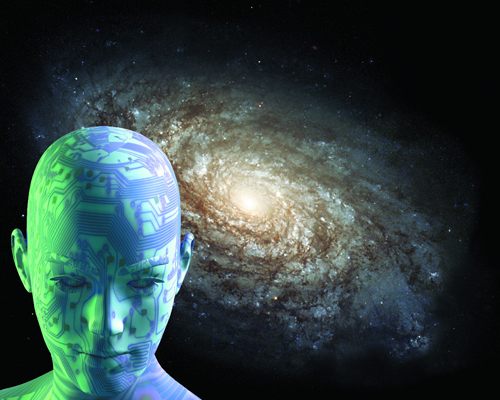
There are many who would challenge Williams’ anti-immortality argument. Consider for example the transhumanists. This movement includes the scientist Aubrey de Grey and the philosopher David Pearce, founder of Humanity+. Transhumanism calls for human lives and abilities to be enhanced by the application of new technologies. As part of this, Transhumanists believe that ageing and suffering are not inescapable features of our evolutionary inheritance, and that it will eventually become possible to reduce and eliminate even death itself. Pearce outlines the transhumanist agenda in terms of three goals: super longevity, meaning living far beyond the current human lifespan; super happiness, meaning raising the ‘hedonic baseline’ of humanity (how happy people feel) so that people experience ever greater levels of wellbeing; and super intelligence, meaning augmenting the human brain to think more clearly, rationally, and empathetically, thereby reducing both personal and collective suffering. Pearce and his fellow transhumanists make a reasonable observation: the advances of the last century alone have resulted in life expectancy rising substantially in the most affluent countries, and even in some of the least affluent. It follows that continued technological progress will extend this trend further still.
However, are the transhumanists assuming too much? It is statistically true that life expectancy has increased for most people, yet human wellbeing still appears to be in something of a crisis. We have technologically augmented significant areas of our environment, and the use of artificial intelligence may make certain tasks easier – but advances in technology also increases the productivity burdens on workers. For instance, the smartphone has enabled employers to reach employees at any hour in any location. Clearly, technological advancement does not automatically mean improved wellbeing or a reduction in suffering. Technological augmentation, therefore, may not produce the purely positive results the transhumanists hope for.
Another transhumanist question worth pausing on here, is: At what point does a increasingly modified human being cease to be human in a meaningful sense?
Identity Loss
Williams argues that the value of eternal life rests upon the continuity of personal identity. After all, if it’s not you later, then in what sense have you survived? His point is that for immortality to be worth wanting, the being who lives forever must genuinely be the same person who desired it. If that continuity of identity is absent, then one is, in effect, already dead, and we arrive at something close to a modification of the Epicurean observation that when death is present we are not, and when we are present, death is not – but not in the Epicurean’s positive interpretation that one should not fear death, but rather that immortality simply ceases to be something for me to strive for if there is no actual me enjoying it.
There are real tensions within some religious traditions regarding whether the indefinite continuity of identity is possible. In Buddhism, for instance, it is not entirely clear whether the being being reborn through the mechanisms of karma retains any meaningful personal connection to the being who died. If so, this form of eternal life may not satisfy those who hope to benefit personally from the fruits of their good karma. Similarly, as the philosopher Peter Geach argued in his 1969 work God and the Soul, if the soul is not embodied, it is unclear how this soul can meaningfully be said to be me or in what sense this would constitute eternal life for me specifically.
Boredom-Proofing Humanity
Does Williams convince us, then, that immortality is fool's gold? John Fischer thinks not. He has argued that Williams overstates the likelihood that human beings will exhaust their categorical desires, see for instance the article ‘Immortality and Boredom’ (The Journal of Ethics, 2014). Passions such as art, love, or philosophy may well continue to engage and sustain a person indefinitely.
Williams can certainly be accused of drawing generalised conclusions about human psychology from a single thought experiment – conclusions that may not hold for all categorical desires, either now or in the future. It can also be argued that the more one enjoys and learns, the more new projects and interests emerge to feed further desires – compound interest, if the reader will forgive the pun. On this view, immortality need not be as tedious as Williams suggests. Fischer would argue that a person of reasonable imagination could sustain themselves quite comfortably intellectually for three hundred years, at the very least.
But an even stronger challenge to Williams here is that he’s working with a fixed view of human psychology. With developing technology, including microchip implants, gene editing, and personalised medicine, humans may eventually be able to engineer their psychology to achieve levels of happiness currently unimaginable, making it obsolete to speak of existential boredom, when that very condition might be engineered away. So Williams has perhaps best demonstrated that in our current human condition humans would struggle with immortality: he has not demonstrated that modified future humans would not embrace immortality with enthusiasm. In a world where we have found ways to offset the less helpful features of our psychological inheritance – among them negativity bias, emotional dysregulation, jealousy, and rage – there may well be a path to greatly extended life that does not fall foul of the tedium Williams describes. Just as computers now operate at depths unimaginable even a decade ago, the enhanced future human mind might cope with centuries of existence in ways we cannot presently conceive.
An Essential Loss?
It’s worthwhile to speculate about the future, but one must be honest about the fact that it is a guess, as yet unproved. Williams was working relative to the technology and psychology of his own time, and it’s arguably unfair to criticise him for failing to account for possibilities that as yet were entirely hypothetical. There is, however, a deeper challenge to the desirability of immortality that the boredom debate tends to obscure.
Martin Heidegger argued in Being and Time (1927) that human beings are not simply creatures who happen to die. Rather, we are creatures for whom the awareness of death is constitutive of who we are. He called this condition ‘being-toward-death’. On Heidegger’s reckoning, the recognition that our existence is finite is not merely background noise, but the very condition that makes our choices matter. To commit to a career, a relationship, or a cause, is to accept a path that only makes sense against the approach of an ending. Consider what we most genuinely admire in peoples’ lives: the parent who sacrifices their own ambitions for their children; the artist who spends a lifetime perfecting a craft they know they will never fully master; the activist who works hard for a cause they will not live to see completed. None of this carries the same moral weight for a being with unlimited time available. An immortal can always afford to wait, to hedge his bets and keep his options open, and in doing so may find that his choices gradually lose the very weight that makes them categorical.
The transhumanists promise us more time. Heidegger suggests that it is precisely the limit on our time that makes it worth anything.
Endless Conclusions
Perhaps the most honest thing that can be said about the desire to live forever is that it’s a displacement – a confusion of one desire for another. When most of us say we want immortality, what we actually mean is that we want more time for what matters to us. More time with the people we love, more time to pursue what gives life meaning, more time to see how things turn out. That is not a desire for endless duration, it’s a desire for more depth.
Williams is right that an immortal life risks losing precisely the depth and quality that makes life worth living. Heidegger adds a sharper point still: it is not merely that immortality might produce boredom, but that a life without death is structured differently from ours in ways that may make urgency, commitment, and genuine love increasingly difficult to sustain. When every choice is revisable and no horizon is final, choices lose the weight that makes them meaningful.
The transhumanists may yet prove Williams wrong about boredom. But whether a technologically extended life would still be a genuinely human life, or in engineering away our limitations we also engineer away something essential to humanity, remains an open yet urgent question.
The ethicist Michael Sandel reminds us that there is a form of wisdom in receiving life as it’s given rather than endlessly remaking it on our own terms. I cannot help but wonder whether that’s an ominous warning to those who would seek to augment human beings exponentially. Such a project risks two things. First, to borrow some words from Jurassic Park, “Your scientists were so preoccupied with whether or not they could, they didn't stop to think if they should.” Second, as mentioned, at what point would a sufficiently augmented human being cease to be human in any sense we would recognise?
So: would you drink the elixir of eternal life? Or perhaps the better question is, What, exactly, do you think you’d be preserving, and would the being that emerged after a long, long time still recognise your answer?
If you’re reading this in three hundred years’ time, do let us know how it turned out.
© Dan Pollen 2026
Dan Pollen is a philosophy teacher from Kent, England.
Advertisement
