


Your complimentary articles
You’ve read one of your two complimentary articles for this month. To have complete access to the thousands of philosophy articles on this site, please
You can register for a free account to have four complimentary articles per month. We will occasionally email you a newsletter, from which you can unsubscribe at any time. We do not sell personal data or otherwise disclose personal information to other organisations.
Articles
Why Sport Needs Good & Evil
Kola Adeosun & Ato Kenya Rockcliffe on the dynamics of sporting greatness.
Every so often, an athlete emerges who redefines their sport – a figure so dominant that their very presence forces competitors to recalibrate their ambitions. These athletes are not just champions; they become symbols. The media, fans, and broader sporting culture do not simply celebrate them, they categorise them and mythologize them. Some are revered as heroes, paragons of talent and humility; others are cast as villains, defined by arrogance, ruthlessness, or an unwillingness to conform to traditional sporting narratives. Why does this categorisation as ‘good’ or ‘evil’ happen?
Effective sports narratives, like all great storytelling, thrives on conflict. So whether real or imagined, the need to frame athletes as ‘good’ or ‘bad’ is not just a media trick – it reflects how humans interpret the world. But there is a further interesting recurring pattern in sports media. Sporting greatness is often framed differently depending on whether there are one, two, or three dominant athletes in the field. When a single athlete stands alone, they can become both beloved and hated, embodying greatness in all its contradictions. Tiger Woods, Serena Williams, and Michael Jordan, all lived in this paradox. By contrast, when two rivals dominate a sport – such as footballers Lionel Messi and Cristiano Ronaldo – the media often frames them in contrast: one must be the ‘artist’, the other the ‘machine’; or one the ‘humble genius’, the other the ‘ruthless competitor’. This contrasting reflects metaphysical or religious dualism, whereby the world is divided into forces of good and evil. So this is not just a quirk of sports journalism, but a reflection of social, historical, and cultural forces. From ancient dualistic worldviews, such as the pagan gods' eternal battles between order and chaos, to the moral oppositions found in all cultures, the need for contrasting figures has long been central to human storytelling. Modern media, too, thrives on conflict and contrast, and sport becomes a battleground for meaning. So why does greatness require a villain, and how do we decide who plays that role? Moreover, when there are three top competitors – such as Novak Djokovic, Rafael Nadal, and Roger Federer in tennis – the dynamic shifts again. Two are embraced as the primary figures, while the third is often cast as the outsider, the disruptor, or even the antagonist. These patterns need explaining.
Singular Greatness & The Will to Power
When an athlete stands alone at the pinnacle of their sport, they are not just dominant, they embody the sport in peoples’ eyes. Their presence transcends competition; their victories set the standard against which all others are measured. But with this singular greatness comes a paradox: they’re both worshipped and resented, often at the same time. Athletes like Tiger Woods, Serena Williams, and Michael Jordan did not just win – they reshaped their respective sports. Their dominance made competitions feel like formalities, and disrupted the traditional order. The media and public, in response, struggled to categorise them within a simple heroic narrative. Instead, their response oscillated between idolisation and vilification, the athlete’s greatness making them simultaneously untouchable and isolating.
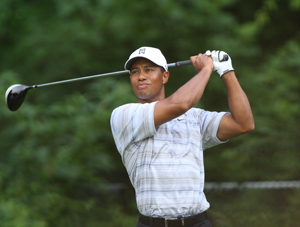
Tiger Woods. What a great driver
Tiger Woods © Keith Allison 2007 Creative Commons 2
Friedrich Nietzsche’s (1844-1900) concept of the will to power helps explain how an athlete's raw dominance can both excite and scare people as they challenge established norms and force others to recalibrate their ambitions. The will to power – the pursuit of dominance or mastery over oneself, others, or the environment – was proposed by Nietzsche as the fundamental driving force behind human desire and action. This drive for self-determination is seen in the total control a great sportsperson exerts over themselves, their opponents, and the sporting landscape. Nietzsche’s distinction within the will to power between kraft (raw force) and macht (power in action) is particularly useful in understanding singular greatness. Great athletes possess immense kraft – natural ability, an overwhelming drive to win – but as they turn it into macht – as they apply their talent – they start to exert control over an entire sport, and the response shifts. The public, drawn by the struggle, begins to resent absolute power.
This tension is inevitable. Sport is drama, and drama requires conflict. When there’s only one dominant figure, the sport lacks a natural antagonist, so the burden of playing both protagonist and antagonist falls on the athlete themself. They’re cast as both hero and villain; admired for their greatness, yet criticised for making victory seem too easy. Tiger Woods for instance was celebrated as a ‘generational talent’, but was also resented for making golf ‘predictable’. His eventual downfall was met with both sympathy and schadenfreude. Serena Williams redefined women’s tennis, but was repeatedly cast as ‘too intimidating’ or ‘too dominant’ by media narratives that struggled to place her in the mould of a traditional female sporting hero. Michael Jordan was basketball’s ultimate competitor, but his relentless will to win alienated teammates and invited criticism of his ruthless approach.
In these singular cases, greatness is polarising. Fans marvel at dominance but also crave unpredictability, an underdog, a competitor who can bring tension back into the sport. This ensures that singular greatness is rarely met with universal adoration. It is only in retrospect – after they retire, after their era has passed – that these athletes are often purely appreciated. When they’re no longer seen as a threat to the sport, their legacy is re-evaluated, and the villainy ascribed to them fades into myth.
The Binary Rivalry Effect: When There Are Two
Unlike the ‘Singular Greatness Paradox’, where one athlete embodies both admiration and resentment, the presence of two dominant athletes in a sport makes it easier for media narratives to assign one as the hero and the other as the villain. This again reflects the deep-seated cultural preference for dualistic storytelling, where every great rivalry must be framed as a battle between opposing forces.
Take Lionel Messi and Cristiano Ronaldo for example. Messi is often depicted as the ‘artist’ – a ‘humble genius’ with ‘God-given talent’ – while Ronaldo is cast as the ‘machine’ – driven, ‘arrogant’, and hyperaware of his own greatness. Objectively both are extraordinary, yet we struggle to view them outside of this moral framework. The logic is simple: if one is the embodiment of good, the other must be the counterpoint – otherwise, the narrative lacks dramatic tension. Without antagonisms, the greatness becomes less compelling. The lone genius needs doubters to defy; the underdog needs an oppressor to overcome; and the hero needs an adversary to make their triumph meaningful. Without a villain, victory feels too easy, too inevitable. Messi’s victories, then, become framed as a triumph of good over evil – not because Ronaldo is evil, but because the structure of our stories demand that someone must play that role.
This binary mode of thinking is not new. Religions have long thrived on dualistic opposition: the eternal struggle between good and evil, order and chaos. It helps us structure reality, and provides a sense of equilibrium. Modern media, from films to video games, continues to recycle this fundamental opposition, and sport is no exception. Thus, although the real moral differences between Messi and Ronaldo may be marginal, we impose a moral hierarchy to make narrative conflict-based sense of their rivalry.
The Outsider Effect: When Two Become Three
However, when top rivalry expands from two to three, the clear binary opposition that once structured the narrative begins to fracture. The presence of a third disrupts the simplicity of good versus evil, forcing the media and public to recalibrate the storytelling framework. So instead of a straightforward hero-villain dichotomy, a new dynamic emerges – often one where two are positioned as noble rivals, and the third becomes the outsider, the disruptor, the antagonist.
Nowhere is this clearer than in men's tennis, where Roger Federer and Rafael Nadal were long framed as the perfect opponents: Federer, the elegant, graceful genius, and Nadal, the relentless, passionate warrior. The arrival of Novak Djokovic complicated this equation. As a result, Djokovic was often cast as the intruder, the disrupter. Even as he surpassed both Federer and Nadal in achievements, he was rarely afforded the same level of affection.
This aligns with the ‘Scapegoat Theory’ of social philosopher René Girard (1923-2015), which argues that societies maintain order by projecting tensions onto outsiders who absorb collective anxieties. In sport, this dynamic takes effect when a third dominant figure emerges. With Federer and Nadal already symbolising the idealised rivalry, Djokovic became the scapegoat – the one onto whom frustrations, discomfort, and resentment are displaced. His defiance, his willingness to challenge the pre-established order, made him an easy target for this resentment.
This dynamic is not about personality or playing style; it’s about maintaining a moral equilibrium in the mythology of greatness. Since Federer and Nadal had already been designated as the ‘good’ and ‘evil’ forces in tennis’s grand narrative, Djokovic had to be something else. His own emerging dominance disrupted the sentimental attachments fans and the media had already built, so he was framed as the new ‘villain’, not because of any wrongdoing, but because the narrative demanded one.
Ultimately, the shift from two to three reveals the fragility of dualistic thinking. While we crave simplicity, sport and life are rarely so neat. Yet rather than embracing multiplicity, we instinctively restructure the story – such that when two become three, two remain in harmony, and one is left standing apart.
The Necessary Villain: Why Greatness Needs an Antagonist
Ironically, the athletes we cast as villains are often the ones most similar to us. Indeed, their journeys often reflect a classic heroic struggle – the relentless pursuit of victory, the refusal to conform, the unshakable belief in their own destiny. Novak Djokovic spent his childhood hearing bombs fall in Serbia, using tennis as his escape route. Cristiano Ronaldo grew up in poverty, training in Lisbon as a young boy. He and his teammates would visit a McDonald's near their training ground, where a woman named Edna and her colleagues would occasionally give them leftover food. Football became his way out, a path to a better life – one he pursued with unrelenting dedication. These are the ones who fight their way to the top from nothing, embodying Nietzschean greatness as they transform their raw kraft into macht. They reject sentimentality, and they do not seek to be loved; they seek to dominate. They’re driven by the will to leave their mark on a world in which they might otherwise be irrelevant. In this they pursue the very virtues many claim to admire. So why do we isolate them and vilify them when they achieve what we all dream of?
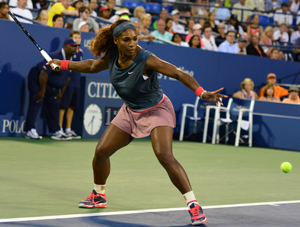
Serena Williams
Serena Williams © Edwin Martinez 2013 Creative Commons 2
Perhaps Ronaldo and Djokovic and similar athletes unsettle us because they represent what is attainable through sheer will. Their success is not easily characterised as merely luck or natural talent; it’s a product of ruthless determination – something that, in theory, is within all our reach. In this way, their success forces us to acknowledge our own limitations.
Messi and Federer, by contrast, are framed differently. Although they, too, have overcome adversity, their greatness is often narrated as something more ethereal – not sheer force of will, but a gift, an innate brilliance that feels effortless rather than earned through struggle. This absolves us from comparing ourselves with them; we can admire them without questioning whether we, too, could have been great had we only worked harder.
This again illustrates that sporting narratives, even when they emerge organically, are shaped to fit our storytelling conventions. When an athlete becomes uniquely dominant, the media instinctively pushes back, finding flaws, creating drama, and frequently framing them negatively, as arrogant, robotic, or undeserving of sympathy, etc. In contrast, an emerging rival is cast as the counterpoint – the one with humility, effortlessness, and grace. The more an athlete appears to impose themselves on the sport, the greater the need to frame their opposite as more naturally gifted, purer, more deserving.The singular idea of ‘unchallenged greatness’ does not satisfy our hunger for narrative tension. A champion without struggle is uninspiring, and a rivalry without contrast lacks drama. Sporting greatness, like all legendary stories, demands conflict.
Conclusions
The story of greatness in sport is not a simple one. Athletes who rise to the pinnacle of their sport do not merely achieve excellence; they become symbols, embodying a complex set of narratives that go beyond only relating their physical prowess. Whether standing alone in their dominance or engaging in fierce rivalries, athletes are caught in a tension that requires them to play roles – sometimes as the protagonist, sometimes the antagonist, sometimes both. The media, driven by an intrinsic need for conflict, frames these athletes within a structure of good and evil, hero and villain. This need to categorise greatness into simplistic roles is not just a media construct, but a reflection of deeper cultural forces that shape how we view power, success, and conflict. The stories we tell about athletes are, in many ways, a mirror of our own desires and anxieties about achievement, and our morality.
However, it’s worth considering whether our need for villains in sport reflects something inevitable. Do we, in our quest for simplicity, miss the opportunity to understand greatness in its complex form? Can we learn to embrace the multiplicity of athletic achievement without reducing it to a dualistic struggle, or must we always have a villain to counterbalance the hero?
In the end, perhaps the greatest athletes are those who refuse to be confined by these labels, who transcend the stories we tell of them, and, in doing so, redefine what greatness truly means. True greatness, then, might not be just about victory, but about the constant tension between light and shadow, brilliance and flaw, humility and ambition. It is in this complexity – where athletes are neither saints nor sinners – that we may find the most profound definition of greatness.
© Kola Adeosun and Ato Kenya Rockcliffe 2026
Kola Adeosun is a Nigerian-British educator and writer based in the UK, who explores the intersections of philosophy, sport and governance.
Ato Kenya Rockcliffe is an educator and Sport for Development practitioner who teaches at the University of Trinidad and Tobago and the University of London.
Advertisement
