


Your complimentary articles
You’ve read one of your two complimentary articles for this month. To have complete access to the thousands of philosophy articles on this site, please
You can register for a free account to have four complimentary articles per month. We will occasionally email you a newsletter, from which you can unsubscribe at any time. We do not sell personal data or otherwise disclose personal information to other organisations.
Films
Wuthering Heights
Michael Au-Mullaney on K.E. Løgstrup on love.
As many viewers of director Emerald Fennell’s Wuthering Heights (2025) have pointed out, this movie’s Heathcliff is just not evil enough. Fennell makes no apologies for not following all the details of Brontë’s 1847 novel, which is all for the best, since movies that slavishly follow their source material are usually not better for it (with the exception of Holes). Fennell has said that her goal in making the film was instead to capture the feeling of reading the novel when she was a teenager. The problem is that the movie does not understand, or even seem to want to understand, what actually makes reading the book as a teenager so captivating.
In its first half, the movie makes a half-hearted attempt to understand the darkness of erotic desire. Its opening scene connects love with death by making spectators at a hanging burst into an erotic frenzy. An early scene of bondage and voyeurism promises further exploration of sexual power dynamics. But by the time Heathcliff holds Catherine’s lifeless body in his arms and the credits roll, the movie has completely lost touch with the primal feeling the novel evokes – a sense of the terrifying abyss that passionate love can be. By the end of the movie, it all turns out to not really be about anything.
What makes reading the novel in puberty so powerful is that, like the awakening sex drive itself, it awakens the feeling of terror that comes with facing one’s own erotic nature for the first time. As a teenager, our capacity for yearning both repels and attracts us. But instead of making a movie that evokes this same terror, Fennell tries to rewrite the book as a teenager would. Since we long to see Cathy and Heathcliff consummate their love, Fennell will have it so. The movie has a teenager’s same lack of understanding for what makes passion feel both so important and so dangerous.

Wuthering Heights images © Warner Bros Pictures 2025
Love & Passion
K.E. Løgstrup (1905-1981), a Danish philosopher-theologian famous in Scandinavia but still little-read elsewhere, has thought out why we love Wuthering Heights, and why its tale of love’s revenge is so disturbing. His striking essay from 1961 ‘ Hvem har ret? Digteren eller psykologen?’ [‘Who is right? The Writer or the Psychologist?’] concludes with these words (translation mine):
“The writer says: Heathcliff is a Satan, but he loves Catherine.
The psychologist says: Heathcliff is a Satan, ergo he does not love Catherine.
The writer is right; she is in this case a better psychologist than the psychologist.”
This essay (unfortunately only available in Danish) is a confrontation between Emily Brontë’s idea of love in Wuthering Heights, and that of the psychologist Erich Fromm in his 1956 book The Art of Loving. Fromm argues that love is an attempt to overcome loneliness, and achieves this through selflessly caring for a beloved’s spiritual growth. But Løgstrup hates Fromm’s view. Løgstrup thinks that even though love is undeniably central to what makes human life good, love is not the same as moral goodness. Specifically, Løgstrup claims that contrary to much popular thinking, love is not the same thing as supporting the good of another person. Love is more elemental, more wild, more involving of our own desires and claims on life. It is not just about caring for the other; it’s also about wanting to personally thrive through union with another. So Løgstrup insists, following Brontë, that not only morally good people love, the wicked love too. Sometimes, they even love better than upstanding, morally considerate people. In any case, Heathcliff is evil – and he loves Cathy.
This tension is part of what continually fascinates those of us who love the novel, and also part of what it has to say to contemporary culture. Recent popular culture has made some progress in recognizing the damage of toxic relationships and the prevalence of partner violence and abuse. Contemporary discourse has, perhaps as a result, tended to identify ‘real love’ with ‘ethical care’, such that, if he abuses you, he does not really love you. So the modern argument would be that Heathcliff and Cathy don’t really love each other, they’re just ‘trauma bonded.’
Løgstrup suggests this is mistaken. While it cannot in the end be sustained without also including respect and consideration, love is different from and more than ethics. Rather, love is part of nature, in the sense that love is part of the human being’s longing to flourish as a creature and to be fulfilled through mutual intimacy and vulnerability with another human being.
The story of Heathcliff and Cathy exhibits two divergent responses to the vulnerability to which passionate desire exposes us. Løgstrup highlights the fact that because Heathcliff and Cathy grew up together (at the house called Wuthering Heights), their love for each other has no clear beginning, since it seems already to be there before they become aware of it. It’s only once they reach puberty that the risks involved in their love become clear. To be in love means being open to the possibility of being rejected. Your desire for the beloved might leave her cold and indifferent.
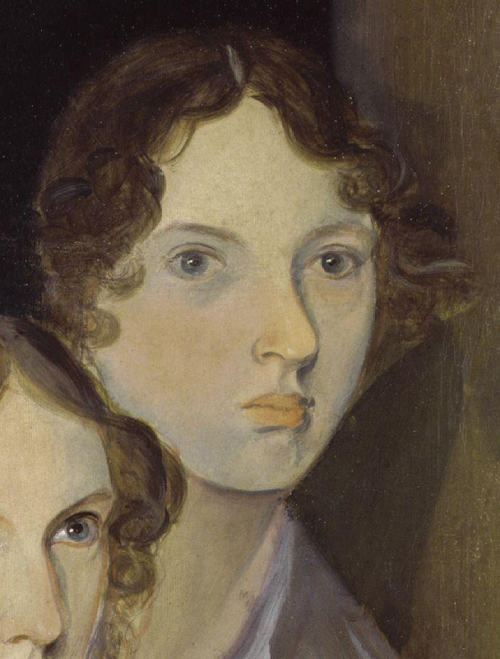
Emily Brontë by Patrick Branwell Brontë. Before 1848
Heathcliff stays committed to his love even when he is rejected. Cathy, on the other hand, at first neglects their unmistakable passion in favor of a conventional, caring but passionless marriage to her wealthy neighbor Edgar Linton. Martha Nussbaum has pointed out that, in the perspective of the novel, it is not plausible that Cathy really married Linton for the money and spurned Heathcliff for his poverty. Rather, his poverty is just her excuse. She spurned Heathcliff because she was afraid of the passion of their love for each other, and of the vulnerability that such passionate love would demand of her, including exposure to the grief of the beloved’s death.
When Heathcliff is spurned, he runs away from Wuthering Heights, only to return with wealth years later. Upon his return, he demonstrates that he will not look away from his passionate love for Cathy, nor hers for him, while she attempts to deny it. Løgstrup claims that Heathcliff enacts revenge against Cathy as the only way left open to him to express his love for her. To be resigned to her marriage choice and let her go free would be a betrayal of their love. So Heathcliff manipulates Cathy’s father and brother, takes possession of Wuthering Heights, and marries Isabella Linton, Cathy’s sister-in-law, with the sole purpose of torturing Cathy. Isabella, who is in love with Heathcliff, is devastated by his harshness and indifference, and lives out her days at Wuthering Heights in misery. Heathcliff meanwhile rages at Cathy, punishing her for neglecting their love.
Unfortunately, the intensity of his rage is just not there in the movie. Heathcliff gets a long respite from his festering resentment by having sex with Cathy many times over in a montage of delight. There’s not even any angry sex! Eventually, Cathy rebuffs him out of a sudden prick of conscience – after which Heathcliff purports to ‘torture’ Cathy by marrying Isabella. However, Fennell makes sure to have Heathcliff get Isabella’s express verbal consent to being an unloved pawn in his game, which Isabella masochistically relishes. So in the movie Heathcliff does not seem to really abuse Isabella, after all, since she’s in on the plan. All of this rather neuters the insight of the novel that even truly evil people may know love and recognize its importance. It is as if Fennell cannot bear to make Heathcliff really evil, because then her audience would not be able to believe that he loves Cathy. Løgstrup’s point, by contrast, is that Heathcliff’s love for Cathy is monstrous, and the shape he gives his love must be morally condemned – but it is love.
Love Gone Wrong
Brontë asks what Fennell never bothers to ask: Why does love go wrong?
This is where Løgstrup is at his most insightful. He names two sentiments shaping the modern concept of erotic love that can help explain Heathcliff’s predicament. First, in the experience of mutual passionate love, a lover feels a rightful claim to the beloved’s expression of love in response. On this perspective, Linton has no right to Cathy’s affection or faithfulness, because neither Linton nor Cathy feel passion for the other. But it means that Heathcliff does have a certain rightful claim to demand Cathy be true to her own love for him. The love they shared is real, and they both owe some acknowledgment and faithfulness to it. Secondly, Løgstrup adds that in falling in love, we usually experience a sense of the givenness of this love. We do not create this passionate connection ourselves, it’s a kind of gift of fate.
When these two sentiments stand in a productive tension, romantic love goes well, the feeling of gratitude for the love protecting the lovers from becoming so entitled to it that they enact revenge on their partner if their partner rejects them. But when they don’t, things go bad.
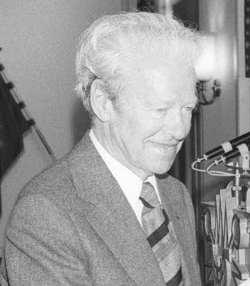
Knud Ejler Løgstrup
© Friedrich Magnussen, Germany 1979 Creative Commons 3.0
The importance of living in reception of love and fellowship as a gift is one of the central ideas in Løgstrup’s fascinating and original work. He calls this idea the pre-ethical goodness of human life. In his view, life with others goes well when we live with gratitude for the goodness in our lives. But real gratitude, in his view, is not demonstrated by saying ‘thank you’. Instead, the test is whether we naturally extend caring attention to others, rooted in what the Christian tradition calls ‘neighbourly love’. In contrast, when we lose the sense that our life, love, and its goodness is a gift, we grow indifferent to the needs of others and focus mainly on our own desires and our festering resentments at having been wronged by life. When this happens, Løgstrup claims, we need ethics as a substitute for the grateful, compassionate love we ought to have but now lack. Unlike love, ethics encourages us to do what we know we should do in our encounters with others, without necessarily desiring to do it. When acting ethically, we are not necessarily emotionally wholehearted because our sense of duty may conflict with our desires. So when you no longer want to do what is best for others, you can still do it out of good moral character – but it would have been better if you wanted to care. Ethics, Løgstrup writes, is a substitute motive. (This is one of the themes of the 1956 book for which Løgstrup is most famous, The Ethical Demand, recently in a new translation by Hegel expert Robert Stern and Løgstrup expert Bjørn Rabjerg.)
Returning to Heathcliff and Cathy, Løgstrup diagnoses the root of the evil in their relationship as being that they lack gratitude for the passionate love they’ve been given by fate. Because Heathcliff and Cathy’s love grew in childhood, they both fail to realise that their love is an undeserved gift. Instead, it feels to them like an unshakable fact of the universe which makes them entitled to possess each other (Cathy even says, “I am Heathcliff!”). They’re missing the experience that people who fall passionately in love in adulthood often have, that they are so lucky to have found this love. As a result, Cathy takes Heathcliff’s love for granted, and gets engaged to Linton before she realizes what she will lose.
This is where ethics could have become a substitute for gratitude. Heathcliff and Cathy needed ethics to restrain their sense of entitlement to each other in order to be saved from their unhappy love leading them to the tragedy of revenge. But Heathcliff, lacking moral character, takes revenge on Cathy as the only way of being faithful to his love for her. His intense passion must be given vent.
The intensity of his revenge in the film is undermined by Fennell giving him another way to vent his entitlement, in the form of their adulterous affair. On Løgstrup’s reading of the novel, Brontë wants to say that ethical respect for others has a value, but not because ethical care is the essence of love, including erotic love. Instead, the value of ethics is in helping to give our passionate love a shape that acknowledges that our beloved is deserving of our respect. If we’ve lost the gratitude we ought to feel for love, we can at least save ourselves from abusing the beloved by allowing ourselves to be restrained by the respect demanded by ethics.
But – and this is Løgstrup’s major interest in the novel – ethics must contend with our lust for life as a counter-pressure.
This is Brontë’s implicit critique of bourgeois Christianity in the novel: the human longing, sexual and otherwise, to live and flourish for oneself in passionate union with others is central to what makes human life good. So the good life is a life of fellowship in which our own desire to flourish is also affirmed and consummated. Without this desire, we are left with good moral character for its own sake. But, Løgstrup claims, morality for morality’s sake is pretty much the worst attitude you can have. Nothing is more lifeless.
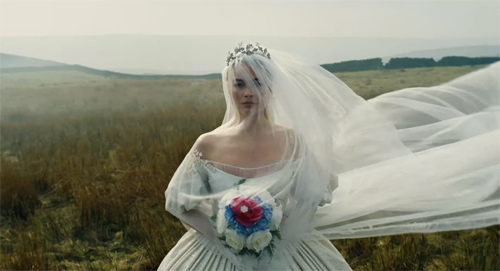
Here, once again, the film misses a rich opportunity – to explore the character of Edgar Linton as a picture of moral character for its own sake. What makes Linton interesting is not that he’s a cuckold who’s in love with a wife who isn’t in love with him; it is that he is not really in love with his spouse, but instead is considerate, caring, thoughtful, and understanding. Just as Heathcliff and Cathy’s love for each other is passionate, the Linton marriage is not. Løgstrup sees the Lintons’ love as instead being an example of Erich Fromm’s moral art of love, in which love is a choice to care for the beloved’s spiritual growth. One can learn how to do this, and can control this attitude oneself.
But Løgstrup says: No! That moral kind of love is just not enough! Love is not an art you practice, it’s a gift you receive. We cannot learn to create it ourselves through techniques or habitual moral virtue. You’re either given it or you’re not. The kind of care for others you make through choices is duty, not love. We need passion to make a full life, even though we also have good reason to fear that passion in ourselves, lest without having some other attitude besides, either gratitude or moral character, it may lead us to ruin. Heathcliff knows this in his bones. This is part of how he earns our interest, even though he is a Satan.
© Dr Michael Au-Mullaney 2026
Michael Au-Mullaney, PhD, is a philosophy researcher and teacher in Chattanooga, Tennessee. For more: michaelaumullaney.com.
Advertisement
