


Your complimentary articles
You’ve read one of your two complimentary articles for this month. To have complete access to the thousands of philosophy articles on this site, please
You can register for a free account to have four complimentary articles per month. We will occasionally email you a newsletter, from which you can unsubscribe at any time. We do not sell personal data or otherwise disclose personal information to other organisations.
Articles
A Memetic Analysis of Narratives & Conspiracies
Ignacio Gonzalez considers how memes replicate into conspiracy theories.
It is curious how the concept ‘meme’ has dwindled down to become a meme of itself. But beyond being a curiosity, this dwindling is unfortunate, since it has trivialized a concept that packs great explanatory power; certainly enough to help us demystify some otherwise perplexing aspects of human communication.
Nowadays, the term ‘meme’ popularly refers to a visually-aided joke passed around online with hopes of becoming viral. When an awkwardly amused Elon Musk told a swooning audience that “I’ve become meme [sic]”, he was using the term in this shallow sense. However, if we want to get our analysis of narratives off to a good start, we must shelve this impoverished signification and retrieve its original meaning. When Richard Dawkins first introduced the concept of a meme in his book The Selfish Gene (1976), he wanted to formulate the idea of a replicator which accomplished in the cultural realm what a gene does in the biological.
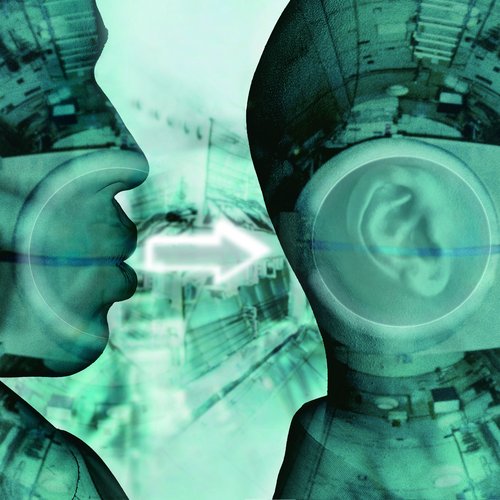
‘Gene’ is a concept that gives essentially equal importance to the physical structure (as a slice of DNA) and to the data instantiated in that molecular substrate. So genes are replicators of both their molecular sequence and the information encoded in it. Memes, on the other hand, do not have a singular physical substrate; instead, they are ideas that get passed around from one mind to another by communication (via various different brain states), and so they’re more analogous to the information component of a gene. We can think of a meme as ‘the smallest piece of meaningful information’. Memes can be about basically anything, from superfluous ideas like ‘wearing a baseball hat backwards looks cool’, to pivotal insights that have changed the course of history, like ‘slavery is wrong’. Memes that are particularly good at spreading themselves throughout the population can be said to have ‘high fitness’. Conversely, unfit memes are those which fail to root themselves firmly enough in the collective consciousness, and therefore risk being forgotten (that is, extinct). Just as natural selection cold-heartedly removes organisms that fail to adapt efficiently to the changing physical environment, so ‘memetic selection’ ruthlessly condemns unfit memes to dusty lexicographies.
Naturally, the analogy with genes breaks down at a certain level: memes do not mutate randomly; memetic selection can be deliberately thwarted or biased, etc. But the parallels between memes and genes are sufficiently robust for our purposes. Genes arrange themselves in highly complex structures known as chromosomes. Sure enough, memes can also form complex structures, which have rather uninspiringly been called ‘memeplexes’. Think of a memeplex as an information package formed by cohesive memes. What we call ‘narratives’ are quintessential examples of memeplexes.
Let’s test this claim by dissecting the memeplex ‘liberal democracy is good’ and lay bare its conceptual skeleton. To grasp the complex concept ‘liberal democracy’, we need some understanding of what its obvious components are about – ‘liberalism’ and ‘democracy’. There are, however, other less obvious concepts without knowledge of which our grasp on the idea of liberal democracy would be tenuous – such as ‘free-market economy’, ‘freedom of expression’ or ‘rule of law’. It’s easy to construct memes out of these concepts by turning them into propositions. For instance, take the phrase ‘freedom of expression’ and attach to it ‘is good’. Now it’s a meme. If we repeat the same sort of stitching operation on all these concepts, then we get a set of value-laden memes which undergird the memeplex ‘liberal democracy is good’.
There is a kind of fractal quality to memes and memeplexes, like an informational rabbit hole. I would not quibble with someone remarking that ‘freedom of expression is good’ has enough substance to animate its own narrative, therefore it ought to be thought of as a memeplex rather than a meme. There is nothing precluding memes from themselves being memeplexes formed by more memes. This is to be expected, since underneath any sufficiently complex concept there’s always a foundation of more elemental concepts. What passes as a meme in any given conversation is a matter of the depth of analysis and agreement with our interlocutors. Those ‘atomic propositions’ that all conversants are willing to accept without analysis count effectively as memes.
Narratives absorb the propositional contents of their constitutive memes and turn them into an overarching claim suffused with moral undertones. This is by design, since in order to have a chance of thriving in a culture, narratives depend on their capacity to hijack our motivations. To do this, a narrative could hardly do better than to latch on to our propensity to pontificate.
The Memes Holding Narratives Together
We have a generic name for those memes that form the scaffolding of a narrative: we call them ‘talking points’. Their infamy is well-deserved, since a talking point’s goal is not exactly to truthfully encapsulate a state of affairs, but instead to transfix facts and force them into a storyline dictated by a narrative. The primary purpose of a talking point is to persuade an audience that ‘this narrative I am helping to push forward is true/good/justified’.
To efficiently advance this agenda, a talking point must at least put on a decent facade of factuality. Consider, for instance, a talking point of the COVID pandemic: “Deceitful statistics misattribute excess deaths to the COVID virus.” Ostensibly, this talking point expresses skepticism about the competence of health authorities, or their motivations. But within the frame of the typical narratives that tend to recruit this meme, the underlying suggestion is that the blame for those ‘excess deaths’ should be put on the vaccines themselves. In other words, the primary objective of this talking point is to promote the narrative ‘COVID vaccine denial is good’.
Evidently, talking points are linguistic blocks whose information content extends beyond their surface semantic meaning. Furthermore, by being remarkably inflexible regarding how they’re expressed, a talking point becomes a socio-cultural marker – a codified declaration of belonging to an ideological tribe – and simultaneously, a thought-terminating cliché. Consider ‘Diversity is our strength’. There are infinitely many ways to express sympathy with the spirit of Diversity Equity and Inclusion programs, but any deviation from the slogan would fail to communicate the sense of adherence to a worldview with the same efficiency. Or consider the class of talking points that bets its memetic worth on the hope that swapping one word for another will instigate a concomitant perceptual swap in the mind of the intended audience. Not a bad gamble. We are told, for instance, that what happened on January 6th 2020 was at worst a ‘riot’ and at best a ‘guided tour’ through the Capitol, but never an attempt at an ‘insurrection’. Alternatively who hasn’t heard that we should take President Trump ‘seriously but not literally’? Trying to document the phraseological tokenization of the talking points of the last five years would truly be the lexicographic quest of the century.

Richard Dawkins
Perversions of Truth
According to the quasi-Darwinist approach to memes, the infectiousness of a narrative increases by maximizing the alignment of the language used with the values of potential hosts. Glaringly, any ideal of truth is absent here. This should be deeply unsettling, since if taken wholesale, it implies that the truthfulness of a narrative has no impact on its fitness. Completely false narratives would be just as likely to spread as more truthful ones.
Although complete indifference to truth for effective communication is unlikely, the situation is nevertheless bleak, since I want to argue that there is a ‘sweet spot of untruthfulness’ on which narratives must land to maximize their reach and resilience.
First, we must acknowledge that most talking points harbor some kernel of truth. So how come narratives supported by partially factual talking points end up being more fictitious than factful? Furthermore, the more factual the talking points of a narrative are, the more insidious the falsehood emerging from their collusion is, because undermining them then requires more familiarity with the details of the facts they misrepresent.
Naturally, not all talking points are created equal. Their content spans a broad spectrum running from ‘true’, to ‘plausible’, to ‘far-fetched’, all the way down to ‘utterly deranged’. When creating a narrative, one needs to be strategic about which talking points to choose, because although there are multiple sayings capable of pushing the same overall notion, the memeplexes formed by these collections can differ vastly in terms of their palatability, and, more importantly, in their ‘duping potential’, across different audiences and contexts. Say, for example, you’re extremely concerned about the safety – or rather, the lack thereof – of COVID vaccines – so much so that you feel compelled to alert as many people as possible about their inherent danger. You could spin a narrative around talking points falling within the ‘plausible’ range of the spectrum. You might for instance allege that ‘vaccine cause myocarditis’ and that the push for universal vaccination was “a get-richer scheme by greedy pharma CEOs.” Alternatively, you could recruit talking points from the ‘utterly deranged’ edge of the spectrum to give momentum to your narrative: what if the vaccines are essentially Trojan horses to ‘inject microchips into our bloodstream’? Could the whole vaccination business have been part of a plot engineered by the World Economic Forum to force a ‘Great Reset’ on society? Both narratives are vectors to advance the same proposition, ‘COVID vaccines are bad’ – but the former, as it is carried on the back of less fantastical talking points, is fitter than the latter. As such, it could be expected to claim a larger share of the collective headspace simply because it is more plausible-sounding.
Let’s apply the same reasoning to the Russian invasion of Ukraine. Suppose you are convinced that Russia’s ‘special military operation’ is justified, even righteous. Why (you ask yourself) would so many people forego the chance to join you on the right side of history? Irritated and motivated in equal measure, you decide to do what you can to rectify this situation by crafting a maximally persuasive narrative, drafting talking points about “NATO being an existential threat to Russia” and maybe a claim that the war would have been avoided if a “CIA-orchestrated coup” had not uprooted Yanukovich’s government. You reckon, rightly, that such a narrative would be fitter than one relying on more fantastical talking points involving “super secret US-funded bio-weapons labs” in Ukraine, or arguing that Russia is waging a holy war against the ‘Satanism’ that’s running rampant across Western society and being adopted by Ukraine.
I’m not suggesting that the most fantastical incarnations of narratives have zero power of persuasion; after all, I did not invent any of these more ‘imaginative’ talking points myself, I just poached them from the informational wilderness that is the internet. What I’m saying is that a greater semblance of plausibility (even if it doesn’t survive even modest scrutiny) serves narratives better in their fight for memetic supremacy. It seems reasonable that if two narratives promoting the same false portrait of reality are given the same amount of airtime, the one incorporating more factually-sounding talking points is likely to persuade more people. And yet, this common-sense view seems to be under a constant state of siege as of late. The reason is that although the democratization of media space has surely brought good things, it has also ushered us into a golden age of conspiracy.
In terms of their narrative structure, conspiracy theories are often cumbersome and baroque. However, their causal logic is often as straightforward as it gets. Essentially the same point is made by journalist Helen Lewis in Sam Harris’s podcast ‘Making Sense’. She stresses that conspiracy theories are in fact ‘very simple narratives’ because they boil the cacophony of the world down to a scene of Disneyesque villainy – to “a bad guy who did it, or a lot of bad guys in a room who did it.”
In fact, conspiracy theories are the most virulent genus of narratives. On the surface, they stretch credulity well beyond most people’s limits. But what they covertly do is significantly more worrisome: they thoroughly corrode our epistemic safeguards. Conspiracy theories not only wipe our slate of facts clean, to fill it with wayward rewritings of whatever events, they also atrophy the mechanisms on which our minds rely to accurately represent the world around us. Chris Kavanagh, from the Decoding the Gurus podcast, puts it like this: “Conspiracy theories flock together in people’s minds, because once you apply the logic ‘they’re lying to you about everything’, well then, yeah sure, they’re lying about the elections, they’re lying about vaccines, they’re lying about autism, [and about] you know, chemtrails.”
The Burden of the Truth-Teller
In his short story ‘An Outpost Of Progress’ (1897), Joseph Conrad wrote:
“Few men realize that their life, the very essence of their character, their capabilities and their audacities, are only the expression of their belief in the safety of their surroundings. The courage, the composure, the confidence; the emotions and principles; every great and every significant thought belongs not to the individual but to the crowd: the crowd that believes blindly in the irresistible force of its institutions and morals, in the power of its police and of its opinion.”
People who feel an irresistible compulsion to find the ‘bad guys’ behind even the most anodyne occurrences operate as if they’ve internalized Conrad’s insight. This quote could well be in the opening of the conspiracy theorists’ mission statement – which is to remove the blindfolds from all the ‘sheeple’ of the world so that they can discover the bankruptcy of worldviews which were never really theirs to begin with – rather, they have been indoctrinated into them by malicious institutions that have managed to disguise mass-delusions as common sense. At the expense of suffering self-induced trauma caused by voluntarily squaring up against the pernicious reality hidden behind a veil of lies, the clear-eyed truth-tellers notice where the seams of the make-believe world constructed by ‘legacy’ cultural narratives are coming apart. Thus blowing ‘legacy narratives’ apart is the truth-teller’s purpose, and their weapon of choice is the counter-narratives the deluded population derisively calls ‘conspiracy theories’.
I’m inclined to blame the unscrupulous information environment we inhabit for the ongoing ‘sane-washing’ of conspiratorial reasoning. It is perhaps misguided to try to pinpoint the moment when the gentrification of conspiracy theorizing began; rather, the phenomenon seems to be a gradual development of the ‘post-truth’ era, although certainly one event that distinctly reflected the ongoing seismic disruptions to our epistemic environment was the moment when, on live TV, the former White House advisor Kellyanne Conway introduced the term ‘alternative facts’ to our lexicon. Alternative facts form the core of the talking points that bolt together conspiracy theories. They are also the main reason why most of these narratives are not falsifiable. If they were, then at least we could begin to have a reliable tally of their successes and misses.
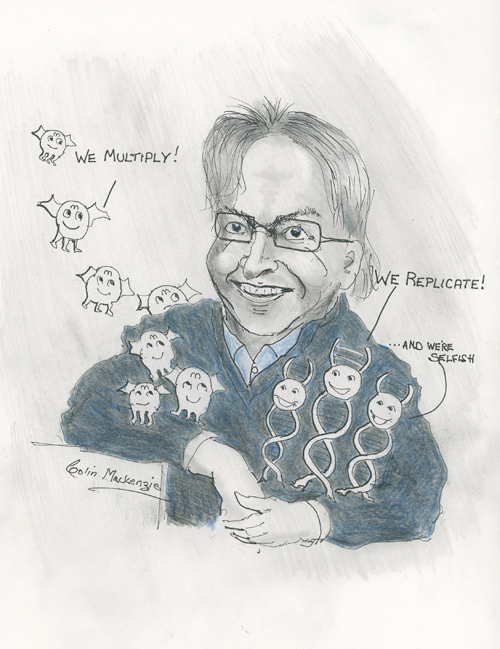
Richard Dawkins Reproduces by Colin Mackenzie
Do We Really Care About the Truth?
In an interview for the online hub Big Think, Sam Harris says:
“Whether you’re a racist or a fascist or a communist, or a democrat or an environmentalist, whatever your thing is, that is a tissue of sentences in the end… It’s all a word cloud… that you have given credence [to], for whatever reason… If you are rational, those reasons… rest on arguments and semantic knowledge that amounts to evidence, right? You can point to the thing that persuaded you, and most importantly, you can point to some hypothetical state of the world that would convince you that you are wrong. Which is to say that your beliefs are falsifiable. And if your beliefs are not falsifiable… Well, then that’s proof that you didn’t get them by being in contact with reality in any sense” (my emphasis).
I agree almost entirely with Harris here. I would only edit one phrase: instead of claiming that worldviews reduce to a ‘cloud of words’, a more accurate claim would be that they are a ‘web of narratives’. But the swap of metaphors leaves his main message untainted: our representations of reality eventually condense into a network of words. Since language is also the substance of falsehoods, these representations of reality can become nothing but a web of lies; one so treacherous that it compels us to reluctantly nod in agreement to Simone Weil’s pessimistic and overarching remark about language that “by the power of words we always mean their power of illusion and error.” But even when wrong, a misapprehension might at least be falsifiable if it can be checked by reference to the external world. For the most part we do want our beliefs to reflect reality with as few distortions as possible. And yet we eagerly assimilate narratives that are not only irredeemably false but sometimes, also irredeemably unfalsifiable. Why?
We already glimpsed some of the tragic ways in which narratives subvert truth. Why do we rally behind such deceptive schemes? I shall here place the fault on some of the inherent frailties of human psychology. And here, once again, Darwin can offer some guidance.
Some of the tarnish on evolutionary psychology’s reputation is sadly warranted (if you ever argued that girls love pink because our ancestral mothers evolved a visual keenness to spot berries in the forest, then you’re part of the problem). But we ought not to dismiss the entire discipline as hogwash. If applied discerningly, it offers an illuminating framework to make sense of a plethora of human behaviors and proclivities. So let me responsibly offer a relevant insight from ev psych. Put bluntly, we did not evolve to become objective truth-seeking machines; rather, we evolved into fallible likely-true-seeking beings. This is not to say that evolution closed off all possibilities for us to devise (nearly) dispassionate methods for pursuing truth. Science best embodies the spirit of rebellion against this morsel of ‘Darwinian heritage’. But we must recognize that evolution did not optimize our abilities for objective reasoning, rather, it exerted pressure to mold our psyches to prioritize sense-making and emotional comfort. Hamstrung by this hierarchy of priorities, the ‘quality control’ machinery of our minds is prone to certify as ‘true’ all sorts of propositions that are merely falsehoods in a clever enough disguise. When presented with a simulacrum of truth that crosses our (often lousy) plausibility threshold, and, more importantly, that nicely blends in with our preexisting yet idiosyncratic worldviews, then our BS-detector is happy to slack off. So yes, most of us value truth highly; but our needs for sense and emotional comfort collude to downgrade our epistemic guardrails, thus heightening our gullibility. Operating with lowered epistemic standards, our minds become more vulnerable to be parasitized by false narratives, especially when their talking points cooperate to put up a half-decent pantomime of factuality. All the while, our self-deluded conscience reassures itself that it remains ‘true to the truth’, even when it has been bamboozled by a parade of half-truths that have been coerced to work for an overarching lie.
Perhaps now it’s easier to see why these concatenations of disingenuous talking points we call ‘conspiracy narratives’ are so effectively deceitful. Talking points can be formidable sense-making pieces of rhetoric, especially if they collectively work to weave a story that brings moral comfort. Conspiracy narratives’ talking points thus become super-sense-making devices. Their very purpose is to arrange unconnected, coincidental or merely chaotic events, into an orderly causal sequence.
So, do we love the truth? Not exactly. What we truly love is the feeling of being ‘true to the truth’ – whether this feeling is justified by the facts or not.
© Ignacio Gonzalez 2026
Ignacio Gonzalez is a physicist and former researcher working in the semiconductor industry.
Advertisement
