


Your complimentary articles
You’ve read one of your two complimentary articles for this month. To have complete access to the thousands of philosophy articles on this site, please
You can register for a free account to have four complimentary articles per month. We will occasionally email you a newsletter, from which you can unsubscribe at any time. We do not sell personal data or otherwise disclose personal information to other organisations.
Books
Free and Equal by Daniel Chandler
Philip Badger critiques a Rawlsian idea of a good society.
Daniel Chandler, an economist and philosopher based at the London School of Economics, begins Free and Equal: What Would a Fair Society Look Like? (2023) by asking an intriguing question. How is it, he wonders, that the most influential political philosopher of the last century has had almost no practical impact on politics or policy? The philosopher in question is John Rawls, whose magnum opus was A Theory of Justice (1971).
Many readers of this magazine will be familiar with the central conceit of Rawls’ masterpiece. For those unfamiliar, it involves an audacious thought experiment in which we must imagine ourselves as being behind a ‘veil of ignorance’ that separates us from any knowledge of our actual identity and associated social status. What kind of a society would we want to live in, Rawls asks, if we had no idea about which particular life we would have to live within it?
The simple answer, Rawls argues, is that we would want to live in a fair society. He elaborates on this by suggesting that any rational being placed in the ‘original position’ behind the veil of ignorance would subscribe to two fundamental ‘Principles of Justice’. The first is the familiar liberal idea that there should be the maximum amount of liberty consistent with the equal liberty of others (this is ‘the Liberty Principle’), and the second that there should only be so much inequality as would most benefit the least well off (‘the Difference Principle’). In a later work, Justice as Fairness (1985), when he realised that the rich could justify quite staggering levels of inequality via dubious arguments about wealth ‘trickling down’ to the unfortunate, Rawls amended the difference principle and made it subordinate to ‘equality of opportunity’ – an amendment Chandler glosses over – although he makes some good points about the inadequacy of equality of opportunity to provide fair outcomes (we could not wish for those with no marketable talents to have wretched lives), and merges it with the difference principle to form a powerful ideological critique of unfettered markets.
The practical application of Rawls’ theory is for Chandler quite clear. It is what is sometimes called an ‘ideal theory’, in that it serves as both a compass pointing the way to a better future and a means to measure our progress towards it. Chandler argues that what follows from this assessment is a radical set of recommendations for policies, such as Universal Basic Income, greater workplace democracy, and wealth taxes. For Chandler, this progressive agenda is propelled not by a socialist urge to prioritise equality for its own sake, but by an avowedly liberal one that sees the equality of opportunity as a necessary precondition for the healthy development of the individual. It is this claim that liberty requires greater equality that will attract the ire of those on the political right.
In fact, Chandler deals with Rawls’ critics with a briskness that leaves a lot unsaid. For example, in his discussion of Robert Nozick’s critique of Rawls, he agrees with Nozick’s point that bounds need to be set to the power of the state, but provides little argument about why where Nozick draws them is wrong. Perhaps a better strategy would have involved a discussion of the limitations of Nozick’s ‘negative’ conception of liberty – of being left to do what one desires (which might be referred to as ‘the freedom to starve’), but that is absent. Nozick’s neo-Kantian theory of ‘natural rights’ has its merits but fails, in a way Chandler does not fully address, to properly consider the role of chance in our starting points in life. Rawls’ ‘veil of ignorance’ avoids this problem, but we still need to justify the progressive urge to draw the line of legitimate interference in a way which respects certain liberties while allowing us to hive off a chunk of the wealth of the ‘haves’ for the benefit of the ‘have-nots’. What Chandler might have pointed out is that Rawls manages to reconcile what are often considered to be contradictory moral instincts. For Nozick, the rights of the individual are sacrosanct, and no appeal to the consequences of the way they dispose of their resources is legitimate. However, in defining liberty as he does, Rawls gives us a space to consider such consequences.
Since he is an economist, we might have expected Chandler to explore the negative consequences of significant wealth inequality, its destabilising political and economic impacts and of its negative impact on human capital. But this too is absent. Moreover, his outline of the views of Rawls’ non-free-market critics, while good, is somewhat terse. Communitarians, we are told, see Rawls’ individual as unrealistically egotistical and calculating, while at the same time, so-called ‘realists’ fancifully think the same individual is reasonable and fair-minded. Both sets of critics consider the individual’s priorities as inseparable from the social and cultural environment which created them. If so, then the critical distance Rawls claims is generated by the veil of ignorance is an illusion.
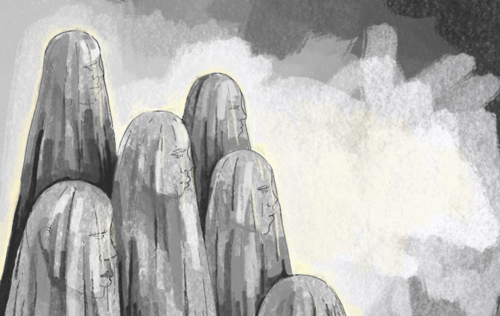
The Veil of Ignorance by Sylvie Reed 2026
What these critics, and this book, could do with, are a few insights from social and developmental psychology. The former suggests that individuals are more than capable of prioritising collective concerns over their own (Jonathan Haidt calls this ‘groupishness’), and the latter – specifically the work of Karen Wynn – indicates that a preference for fairness is present in even the youngest children, and so we might say that it’s innate to any person choosing a society.
Psychological insight might also have been helpful in Chandler’s discussion of national identity and how it might be compatible with Rawls’ apparent cosmopolitanism. Chandler isn’t the first liberal to struggle with such questions, and his conclusions aren’t much different from those of the Canadian philosopher Will Kymlicka: both see us as having ‘special contractual obligations’ to those who share our national identity, and both sense a need to promote the feeling of such obligations. Chandler’s most illiberal policy suggestion is compulsory community work for young adults for social bonding reasons. Such illiberalism is unnecessary: it would be far better to amend the school curriculum to bring together children from diverse backgrounds to work together on pro-social projects. (Chandler is however right in suggesting that we should throw in lessons on critical thinking.)
Chandler’s policy suggestions often are simply too radical to form part of what Rawls called an ‘overlapping consensus’ on the ideal shape of society. It is unlikely, for example, that the UK Labour party will abolish private education, although it has stopped private schools from claiming ‘charitable status’ tax advantages. The Universal Basic Income idea he supports is challenged on the grounds of cost by economists from across the political spectrum, not just those on the right. It isn’t that the idea is a non-starter so much as that its time has not yet come. The AI revolution (which again Chandler passes over rather too quickly) might change that – but for now, the focus should be on a ‘true living wage’ and compensating employers for its cost by using welfare savings to provide training vouchers to enhance the human capital of their employees. This is not to say that ideas such as wealth taxes (as favoured by Chandler) don’t have a role to play; but less radical suggestions, including taxing harmful ingredients and spending the money on better and cheaper school food should come first. In a similar vein, ‘windfall taxes’ on energy companies could be used to insulate the homes of the poor and help towards net zero. But Chandler’s radicalism is forgivable because clearly his aim is to provoke policy discussion rather than just provide us with a shopping list of policies.
While Chandler’s work is not as original as some critics have suggested (for example, Roy Hattersley advocated a Rawlsian direction for the British Labour party as long ago as the mid-1980s), it is more timely than the earlier works. In the late Twentieth Century, the centre left was less on the look-out for a new political ideology than it was concerned to project an image of managerial competence. Today, the ambition needs to be greater.
This is a good book in two senses. Firstly, it represents a genuine attempt to make philosophy relevant to our lives, and secondly, it does so with genuine clarity and enthusiasm. All reservations aside, we should be grateful to Daniel Chandler for it.
© Philip Badger 2026
Phil Badger is a teacher of Philosophy and Social Sciences in a Sheffield school sixth form.
• Free and Equal: What Would a Fair Society Look Like?, Daniel Chandler, Penguin, 2024, 432 pages, £10.99 pb
Advertisement
