


Your complimentary articles
You’ve read one of your two complimentary articles for this month. To have complete access to the thousands of philosophy articles on this site, please
You can register for a free account to have four complimentary articles per month. We will occasionally email you a newsletter, from which you can unsubscribe at any time. We do not sell personal data or otherwise disclose personal information to other organisations.
Articles
The Hedgehog’s Dilemma: A Metaphor About the Challenges of Human Intimacy
Krishna Chaubey explains Arthur Schopenhauer’s poignant thought experiment.
A hedgehog is a small mammal whose back is covered with quills. These sharp spines help the hedgehog in defending itself against predators. However, the quills that work so brilliantly as a defensive device turn out to be a detriment during winters, as then the hedgehog cannot get close to other hedgehogs to share warmth. Whenever one tries to do so, they poke each other with their quills and get hurt. So the hedgehogs will try not to get close and stay far away from each other. Now, the dilemma is that if they stay far from each other, they will succumb to the cold winter but if they stay close, they will poke each other and get hurt. Though they want to be close to each other, they cannot, so the hedgehogs need to find a safe distance where their quills do not poke each other yet the cold is tolerable.
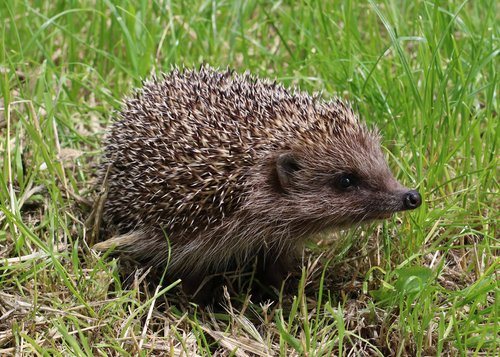
Hedgehog: (Erinaceus Roumanicus) photo by George Chernilevsky, Ukraine. Public Domain.
We human beings are social animals. We crave friendship, relationship, reputation, intimacy. These cravings helped our prehistoric ancestors to survive, because being together meant a higher chance of survival and reproduction. For this reason, we find it painful to be alone for long stretches of time.
Studies of isolation have shown that prolonged periods of solitude can lead to increased levels of stress, cardiovascular disease, stroke and mental health problems like depression. Akin to the harsh winter the hedgehogs suffer from, isolation and solitude are the frost and cold of the winter we human beings endure without the warmth of meaningful relationships, companionship and love. However, when we human beings start to get close to someone, both emotionally and physically, we may find things about the other, such as their beliefs, tastes, values or their view of the world, or their personality or habits, do not accord our own. We know in advance that this is a possibility. These differences may lead us to not like them any more, or be driven away by their not-so-pleasant qualities. The quills in this scenario are mostly emotional but they can at times be physical as well.
Arthur Schopenhauer’s Imperfect Remedy
Arthur Schopenhauer (1788-1860), considered one of the grumpiest, most pessimistic, but most compassionate, philosophers to have ever lived, used this example to describe a dilemma in human intimacy. He did so in an essay in a collection called Parerga and Paralipomena, Volume II. In it he pointed out the similarities between the hedgehog’s dilemma and the problems humans face in forming relationships. (Actually, he said porcupines rather than hedgehogs, but the principle is the same.)
The hedgehog is afraid to get close as it may get hurt by the quills of the other hedgehogs, whereas the human being is afraid to get close (in a emotional as well as physical sense) as he or she becomes vulnerable to the other and may then be betrayed, or embarrassed, or disappointed, or else in the course of building a relationship may have to abandon things they once loved. Yet if they isolate themselves from others, they may instead endure crippling loneliness, which will harm their body and mind, bringing them a greater or lesser amount of pain. Thanks to Schopenhauer’s essay, the problem has become widely known as ‘the ‘Hedgehog’s Dilemma’ or ‘the Porcupine Dilemma’.
Then one may ask, “Is there any solution to this dreadful dilemma ?” and the answer is yes, a pessimistic one but a solution nonetheless. As Schopenhauer put it:
“Thus the need for society which springs from the emptiness and monotony of men’s lives, drives them together; but their many unpleasant and repulsive qualities and insufferable drawbacks once more drive them apart. The mean distance which they finally discover, and which enables them to endure being together, is politeness and good manners. Whoever does not keep to this, is told in England to ‘keep his distance’.”
Parerga and Paralipomena, Vol. II (1851)
So Schopenhauer argues that one must find a ‘safe distance’ in order to neither inflict nor experience pain. Furthermore, he says that the optimum safe distance is that indicated by politeness, good manners and respect for the other’s privacy. In this case, the privacy will be the hedgehog’s quills. If the hedgehog respects the quills of the other hedgehog (or the person respects the boundaries/privacy of others) and gets just close enough for a little warmth (a physical warmth in the hedgehog’s case and an emotional one in the person’s case), then he may not have to endure as much as being alone in the winter (or in complete isolation) or being hurt by the quills (or the unpleasant qualities of others).
This is not a completely satisfactory solution, as Schopenhauer himself observed: “By virtue thereof, it is true that the need for mutual warmth will be only imperfectly satisfied, but on the other hand, the prick of the quills will not be felt. Yet whoever has a great deal of internal warmth of his own will prefer to keep away from society in order to avoid giving or receiving trouble or annoyance.”
In other words, if a person does have enough ‘internal warmth’ (or can survive without the need for others in his or her life), then he or she may not need other people’s ‘warmth’ to sustain themself and will most likely prefer to stay away from society altogether in order to avoid inflicting or experiencing pain. The unsatisfactory part of this is that we may not be able to make and sustain bonds with others without inflicting pain.
Conclusion
We may now realize why at times we cannot bear being alone or sustain a relationship or on the contrary may feel happy in solitude, as Wordsworth is in his famous poem, ‘Daffodils’. The best solution therefore depends on the characteristics of the individual. In the end, a certain amount of suffering is probably an inescapable part of life, one we must endure due to the various challenges life hurls at us. However, we can reduce this suffering, maybe by engaging in the arts, maybe by not engaging with anything at all. Perhaps keeping at a cautious distance and not getting too close too quickly really is our best bet. In any case we must realize the importance of others as unique, autonomous individuals and treat them as such.
© Krishna Chaubey 2026
Krishna Chaubey is at St Xavier’s University, Kolkata, pursuing English Hons.
Advertisement
